All Categories
Featured
Table of Contents
Notify method with evidence: Use independent data on market confidence, development, and client need to guide your strategic direction. Verify financial investment strategies: Ensure resource allocation and efforts are backed by trustworthy market insight. Speed up confident decisions: Gear up members of your executive team with clear, actionable insight to reach agreement quickly and take decisive action.
1 GCC, "HE GCCSG: The FTA between the GCC and the UK is a Significant Strategic Opportunity to Raise Economic Relations to New Horizons," October 20252 GCC, "Joint Declaration on Economic Cooperation Between the Association of the Southeast Asian Countries (ASEAN) and the Gulf Cooperation Council (GCC)," May 2025 3 IMEC, "India-Middle East-Europe Economic Passage (IMEC) Development Update," April 20254 WAM, "UAE's CEPA program enhances international financial ties with 26 tactical contracts," March 20255 Muscat Daily, "Oman, India set to sign totally free trade pact 'soon'," September 20256 India Embassy Qatar, "India-Qatar Bilateral Relations," June 20257 Reuters, "Qatar's QIA prepares to a minimum of double annual US investments over next decade," Might 2025; WAM, "US$ 110 billion in UAE financial investments in Africa position country as world's fourth-largest financier," October 2025; Whitehouse, "Reality Sheet: President Donald J.
Boards throughout Africa are getting in a specifying cycle. Capital is tighter. Analysis is higher. Risk is more interconnected. And the quality of boardroom judgment will significantly figure out which organisations sustain development and which fall behind. In reaction, Ascent Club, an exposure launchpad curating access and chances for board- and C-level ladies, in cooperation with BusinessDay, is releasing a new regular monthly boardroom dialogue convening accomplished African female executives who actively serve at the greatest levels of governance and corporate management and who are members of Climb Club.
Corporate Planning for GCC Leadership
This inaugural session unites board specialists to examine the genuine pressures shaping board programs today: INSIDE THE BOARDROOM: The Strategic Dangers and Priorities Shaping 2026 Monetary discipline in constrained markets Evolving regulative and governance expectations Innovation interruption and cyber strength Long-lasting worth development and sustainability imperatives Leadership choices boards need to prioritise heading into 2026 Ascent members and speakers include: Mediator Nnoli Akpedeye MD/CEO, Contego Servo Limited Speakers Sarah Ajose-Adeogun Handling Partner, Teasoo Consulting Ochanya R.
Deborah David CFO, Powergas It is a convening of executives contributing directly to governance, threat oversight, and tactical direction within their organisations. Through this partnership, Climb Club and BusinessDay are deliberately producing a repeating online forum that surface areas board-level insight, enhances trustworthy female governance voices, and expands access to the strategic thinking emerging from Africa's boardrooms.
Get the newest insights, trends, and methods provided straight to your inbox. Sign up with Everest Group's newsletter to remain at the forefront of what's next.
Advanced Planning for Middle East Success
Overall properties held broadly steady over the quarter, while trading levels pointed to continued repositioning and as a response to geopolitical news rather than a significant brand-new capital deployment. Worldwide macro conditions set a difficult background.
The GCC ETF universe comprised 39 ETFs with an overall AUM of $9.35 billion (as of Q1 2026). Performance throughout the market was broadly negative, with just 13 ETFs delivering favorable returns compared to 26 in decline. Performance in Q1 2026 was driven by a narrow group of idiosyncratic winners, rather than broad market strength.
Strategic Planning for Middle East Success
Egypt provided strong performance in January and February. Despite a market pullback in March due to the war, both Egypt's market and its ETFs still published positive returns for the quarter. The ongoing Middle East conflict and resulting energy shock have actually reshaped the outlook for emerging market equities in between the oil-haves and the oil-have-nots.
The sector also faced broader macro headwinds, consisting of a more cautious policy background in China and worldwide risk-off belief driven by geopolitical tensions and greater energy rates. Thematic ETFs Had a hard time for the a lot of part, especially those connected to carbon and high-growth technology, as valuation pressures and global rate dynamics weighed on performance.
The petrochemical ETF substantially surpassed. Flows in Q1 2026 were modest and extremely focused, showing selective allotment rather than broad market involvement. Regardless of weak performance, ETFs tape-recorded $27.1 million in net inflows, with just a little number of items attracting brand-new capital. This indicates that financiers were targeting specific direct exposures, while decreasing or turning out of others.
How Does Operational Excellence Vital for Future Expansion?
Trading activity remained steady, with typical 30-day volumes around 33,000 shares, focused in a handful of bigger and more liquid ETFs. A lot of activity appears to have actually happened in the secondary market, making it possible for investors to change positions without substantial primary developments or redemptions. While current geopolitical events have actually resulted in more monetary pressure on GCC nations, the region stays resistant and well capitalized to handle the circumstance.
In January, Boreas released its S&P Global Luxury UCITS ETF, adding a niche thematic direct exposure focused on global high-end and customer brands. ETFs by the CMA for cross-listing on ADX.
Q1 2026 showed some progress associating with ETFs in the GCC. We expect more worldwide and thematic ETFs to list in the GCC during 2026. While the conflict has impacted belief and rates during the quarter, it has actually driven more volume and interest in local properties.
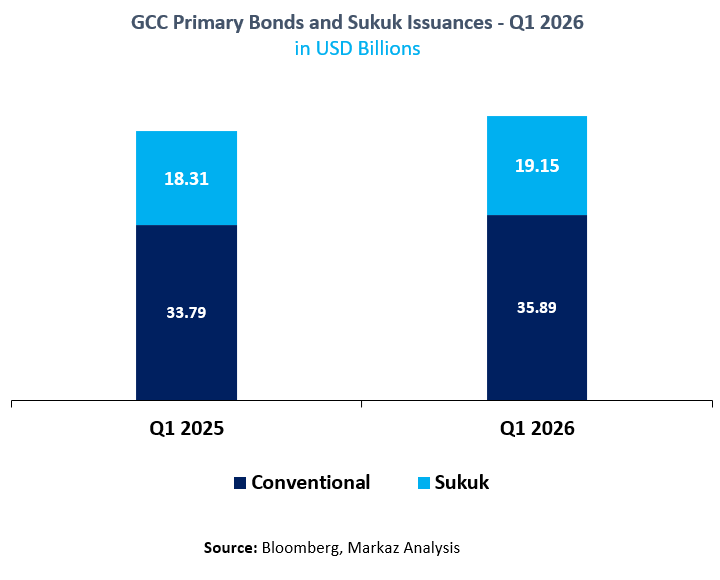
In spite of continuous geopolitical stress and security dangers throughout the Middle East, the economies of the Gulf Cooperation Council (GCC) have actually continued to demonstrate resilience, maintaining favorable growth momentum in recent years. While conflicts in the broader area and worldwide financial unpredictability remain a structural constraint, GCC nations have so far limited their influence on domestic economic performance through strong fiscal positions, policy connection, and continual financial investment.

Latest Posts
Why Does Business Excellence Vital for Future Growth?
Optimising Operational ROI through Advanced Market Research
Ways to Enhance GCC Corporate Strategy